

Published by Aloto Naga | January 10, 2026
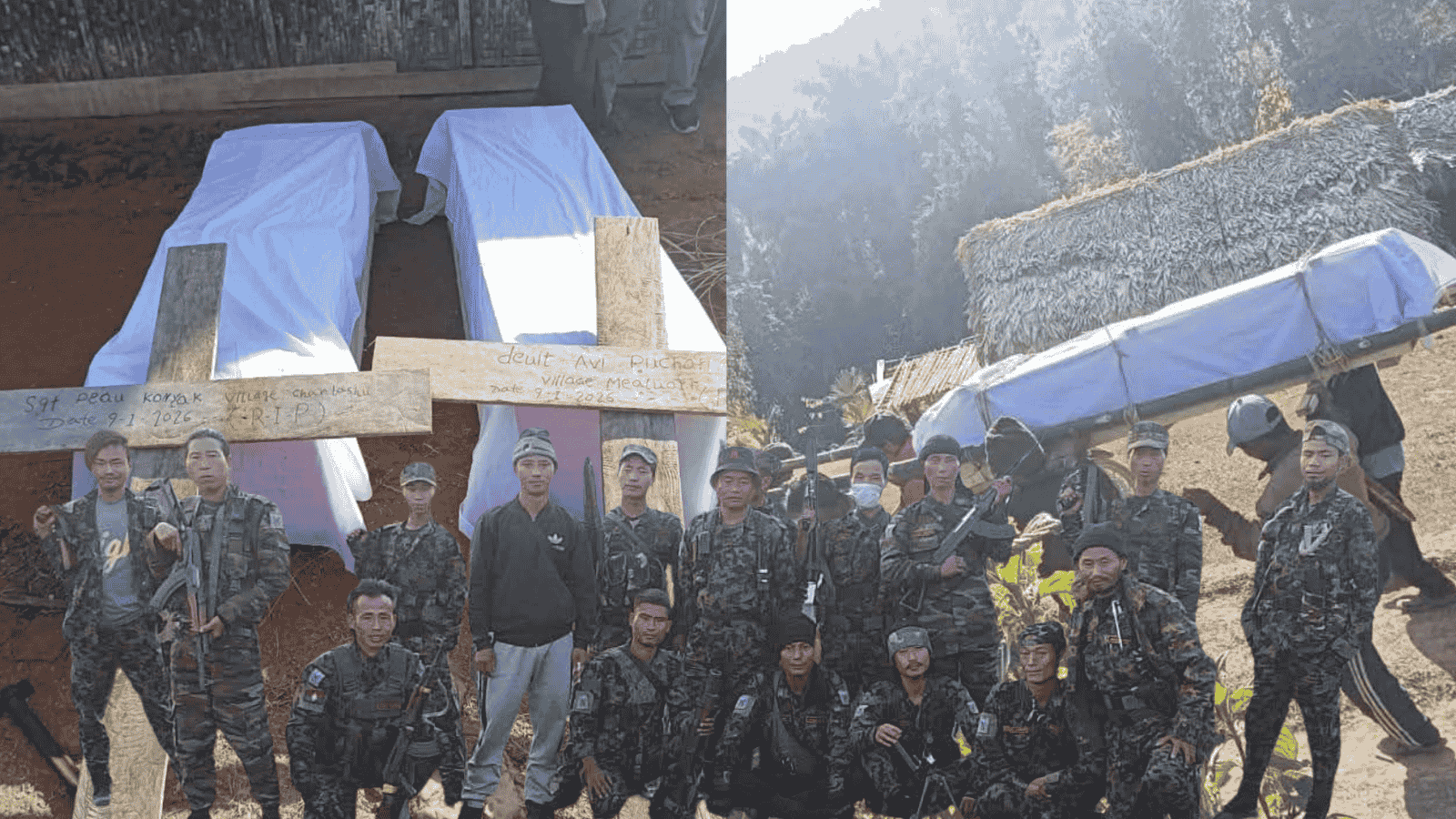
Two NSCN-K cadres killed in a mortar attack at Khamtiang Village in the Pangsau area of Myanmar on January 9. This incident has intensified concerns over renewed factional violence among Naga armed groups operating along the India–Myanmar border region.
The deceased have been identified as Lieutenant Avi Pochury and Sergeant Peyao Konyak. According to confirmed information, both cadres were on official duty when the attack occurred. Mortar shelling reportedly caused fatal injuries, leading to their death at the spot.
Attack Inside Village and Church Compound
In a detailed statement, the NSCN-K (Ang Mai-led faction) alleged that the attack was carried out by cadres of the Yung Aung faction. They described it as an unprovoked act of aggression. The organisation stated the assault involved both gunfire and mortar shelling. It took place within the Khamtiang Village Church compound, a location traditionally regarded as a protected civilian and religious space. Also Read Naga Independence Day Controversy, NSCN Issues Clarification
Our Network

The group termed the incident a serious violation of public safety and the sanctity of civilian areas. Such concerns are heightened as it occurred inside a village setting where non-combatants reside.
Profiles of the Deceased Cadres
Lieutenant Avi Pochury was a member of the Naga Army from the Pochury region. Sergeant Peyao Konyak hailed from the Konyak region of India. Both were described by the NSCN-K as disciplined and committed cadres. They lost their lives during what the organisation called an unjustified and avoidable attack.
The organisation expressed deep grief over their deaths and extended condolences to the bereaved families, comrades, and supporters. They stated that their sacrifice would not be forgotten. Also Read Why Nagaland Citizens Fear Reporting Crime
Acknowledgement of Local Support
The NSCN-K also conveyed its appreciation to church leaders and public representatives of the Pangsau area for their timely intervention following the incident. According to the statement, local leaders took responsibility for safeguarding the mortal remains. They ensured that the deceased were laid to rest with dignity amid an atmosphere of heightened tension.
The group acknowledged that such actions helped prevent further escalation and maintained calm in the immediate aftermath of the attack.
Claims of Restraint Amid Rising Tensions
Reiterating its long-standing position, the NSCN-K stated it has consistently exercised restraint in the interest of Naga unity and peace. This restraint was maintained despite repeated provocations over the years. The organisation claimed that between 2024 and 2025, more than 20 cadres belonging to the Yung Aung faction were detained by its members. They were later released unconditionally as a goodwill gesture aimed at fostering dialogue and preventing internal bloodshed.
According to the statement, NSCN-K cadres were deployed to the Pangsau area with prior information and peaceful intent. They believed that restraint and communication would prevail over confrontation.
Allegations Against Rival Leadership
The NSCN-K accused the leadership of the Yung Aung faction of deliberately spreading misinformation and instigating violence. It alleged that cadres were misled into believing that an offensive was imminent. This claim, the organisation described as false and malicious.
The group maintained that if hostile intent had existed, there were several opportunities to engage earlier, including along known routes and near established camps. Instead, it said, restraint was chosen to avoid further fragmentation among the Naga people.
Concerns Over Civilian Safety
The attack has renewed concerns over the safety of civilians in border villages. These are areas where armed groups operate in close proximity to public institutions such as churches and community spaces. Observers note that incidents occurring inside civilian areas increase the risk to innocent villagers. They deepen mistrust among local communities already affected by prolonged conflict.
Call for Public Condemnation
Strongly condemning the incident, the NSCN-K called upon Naga civil society organisations, church bodies, and the general public to unequivocally denounce the violence. The organisation placed full responsibility for the consequences of the attack on those who planned and executed it. They warned that peace cannot be built on provocation, misinformation, and bloodshed.
The group asserted that history would judge those who choose internal conflict over unity and dialogue. They reiterated their call for restraint and accountability.
