



Published by Aloto Naga | July 12, 2025
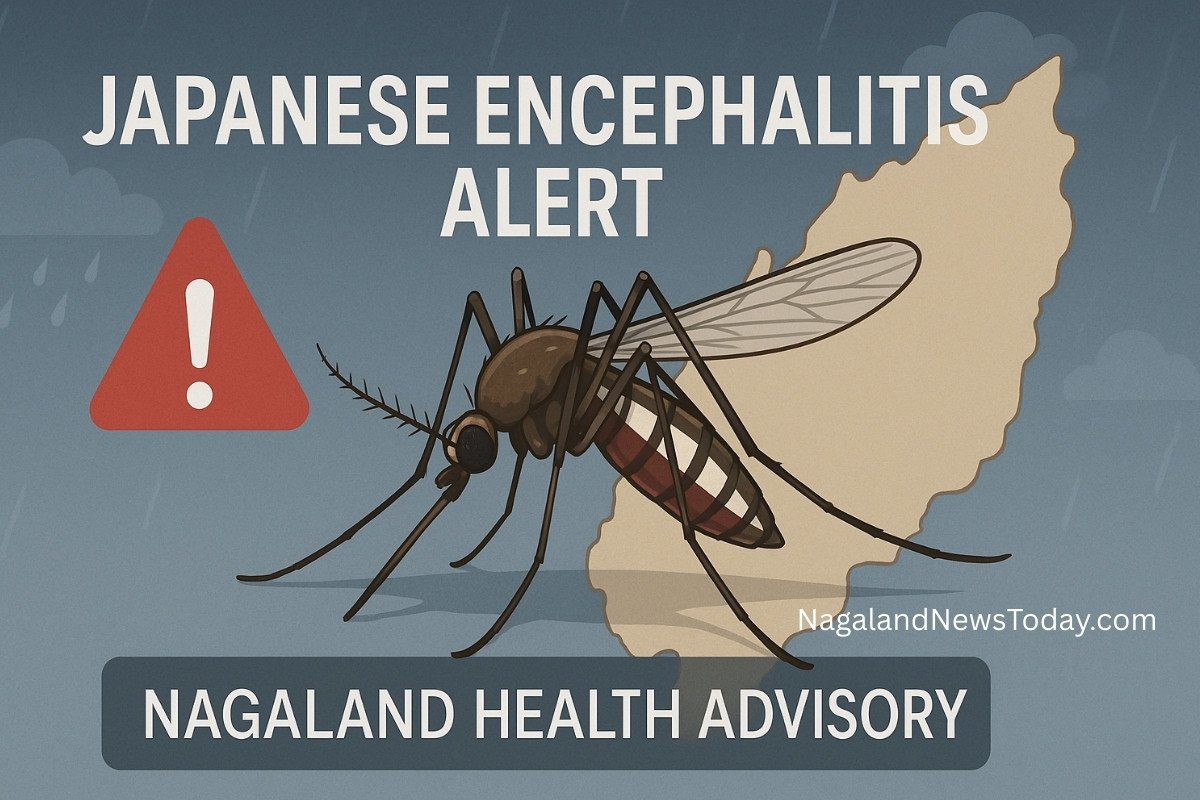
Kohima, July 12, 2025 — Nagaland’s Health & Family Welfare Department has confirmed nine cases of Japanese encephalitis (JE) this year, triggering urgent public health directives amid the active monsoon season. JE, a serious viral infection, is transmitted through Culex mosquitoes typically breeding in stagnant water such as paddy fields and ponds.
Key Facts & Response Measures
- Transmission & Hosts
The virus cycles between Culex mosquitoes and amplifying hosts like pigs and wild birds. Notably, JE does not spread directly between humans. - Scope of Infection
Experts estimate that for each symptomatic JE case, 300–1,000 infections may remain asymptomatic—highlighting substantial hidden transmission. - Clinical Presentation & Treatment
Incubation typically spans 5–10 days, with symptoms including high fever, headache, vomiting, confusion, and potential brain inflammation. No specific antiviral exists; treatment is strictly symptomatic.
Government & Community Actions
| Strategy | Description |
| Surveillance Intensification | District health units are scaling up case detection and reporting. |
| Vector Control | Widespread fogging operations underway to curb mosquito populations. |
| Public Awareness | Campaigns emphasizing mosquito bite prevention, vaccination, and immediate medical care for emerging symptoms. |
| Routine Immunisation | Authorities strongly encouraging vaccination in high-risk and rural communities. |
Precautionary Guidance for Residents
- Avoid mosquito bites by using bed nets, wearing protective clothing, and applying repellents.
- Remove stagnant water near residential and agricultural areas to break the mosquito life cycle.
- Seek prompt medical attention for any individual presenting with sudden fever, headache, vomiting, or neurological symptoms.
- Stay informed via local health bulletins and participate in community immunisation drives.
Why Nagaland Is At Risk
Ongoing monsoon rains create extensive mosquito breeding grounds, elevating the likelihood of JE transmission. Health officials emphasize that proactive vector control strategies and swift response mechanisms are essential to suppress potential outbreaks.
Editor’s Note
Japanese encephalitis remains endemic in parts of India, with annual outbreaks during the monsoon. The current situation in Nagaland underlines the continued threats posed by vector-borne diseases. Strong systems for early detection, immunisation, awareness, and swift containment are vital to protect public health.

