



Published by Aloto Naga | August 4, 2025
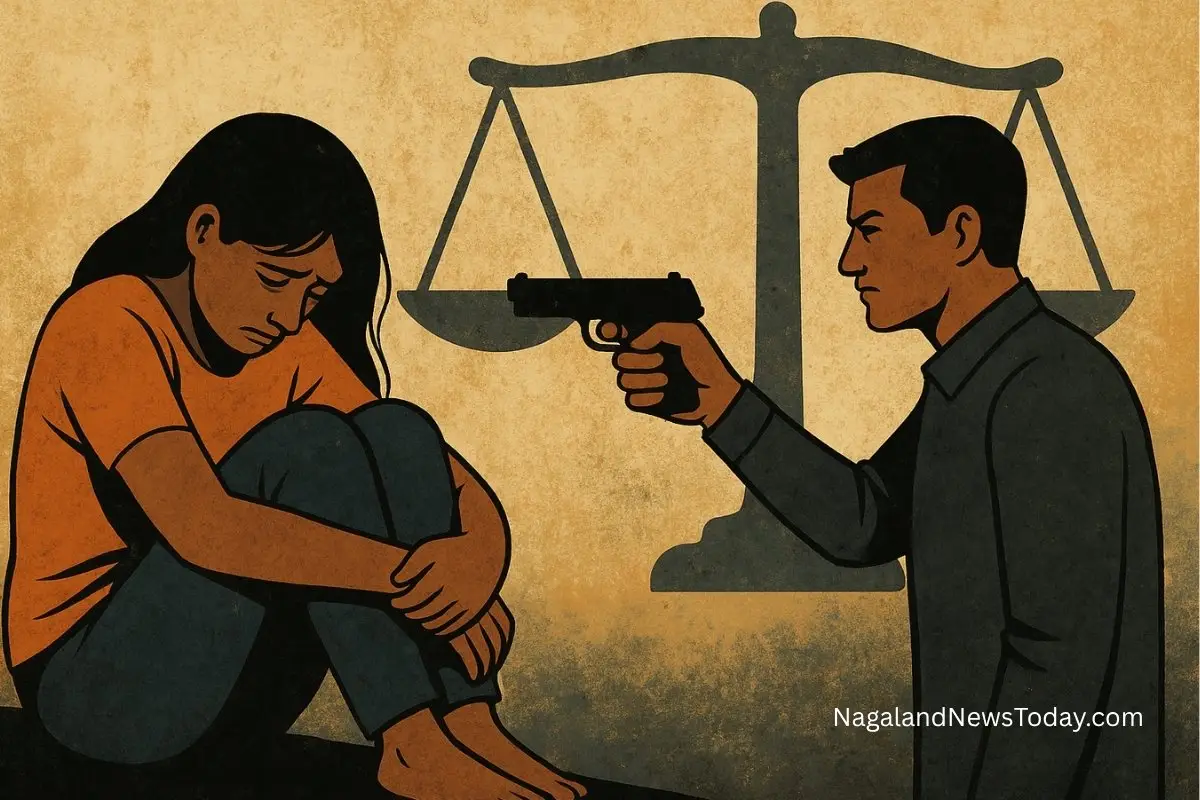
In a country that constitutionally promises justice for all, it is horrifying to see how the very system meant to protect survivors often empowers the accused instead. India’s legal framework — particularly its bail provisions — has become a tool of retribution in several rape cases, where the accused, once released, have gone on to attack, threaten, or silence the survivors and their families. This isn’t just a legal loophole — it is a moral collapse.
The Pattern Is Clear And Disturbing
Several verified cases show how bail has turned into a license to retaliate:
Delhi, July 2025
A 19-year-old rape survivor was shot in the chest in Vasant Vihar by Abuzair Safi, the same man she had accused of rape. He was out on interim bail. His accomplice, Aman Sukhla, helped him flee on a motorbike. The survivor barely survived, and the system failed her twice — first by releasing her attacker, and then by not protecting her. Also Read Kohima Rally: NAWO Protest After Botsa Assault
Gujarat, December 2024
A 70-year-old woman was raped again by the same man, Shailesh Rathod, while he was out on bail. This wasn’t a new crime — it was a repeat violation of the same survivor. The police had granted him bail earlier, and no protection or surveillance was provided to the victim.
Rohtak, Haryana (2013–14)
In a case that shocked the nation, three men accused of gang rape were released on bail. Instead of waiting for justice, they raped the survivor again — to punish her for not settling outside the court.
Unnao, Uttar Pradesh (2019)
Former BJP MLA Kuldeep Singh Sengar was accused of rape. The survivor, while en route to a hearing, was nearly killed in a staged car accident. Her two aunts died, and her lawyer was critically injured. Although not directly linked to bail, it exposed how power and position can silence justice.
Asaram Case (2014–15)
At least nine witnesses and supporters of the survivor were either killed or brutally attacked during the course of the trial. Acid attacks, car crashes, and outright shootings — all part of a coordinated effort to intimidate and derail justice.
A Justice System That Favours the Accused
These are not isolated cases they reveal a systemic failure. The accused often walk out on bail under reasons like:
- Medical conditions
- Marriage or funeral
- “Insufficient evidence” despite ongoing investigation
- Political influence or media silence
Meanwhile, survivors live in fear. Some are forced to withdraw cases. Others are silenced permanently.
India’s bail system was designed to protect the innocent from wrongful detention — not to give predators a second chance to attack.
Time to Shift the Balance
We must ask uncomfortable questions:
- Why isn’t victim protection automatic in such sensitive cases?
- Why do bail hearings not include survivor safety risk assessments?
- Why is the burden always on the victim — to hide, to stay silent, to survive again?
Courts must consider past threats, victim vulnerability, and possibility of retaliation as serious grounds to deny bail or at least impose surveillance and protection orders.
Closing Thoughts
Justice must not only be done — it must be seen to protect. Until the Indian legal system stops treating bail as a mechanical formality, we will continue to read headlines like these: “Rape survivor attacked after bail”, “Accused strikes again”, “Victim silenced before hearing.”
Let bail serve justice not sabotage it.

